
Oura Ring 4 Review: Is This Sleep Tracker Worth It in 2025?
For busy professionals, sleep is a foundational pillar for strategic decision-making. High-stress environments frequently compromise rest, leading to burnout and decreased productivity. In 2025, the wearable technology market is saturated with devices promising ultimate health insights. However, the Oura Ring 4 stands out as a discrete, highly accurate tool designed for recovery and sleep architecture analysis. This review provides an evidence-driven look at the device to help you determine if this investment aligns with your wellness goals. We will explore its specifications, real-world utility, potential drawbacks, and exact steps for maximizing its data.
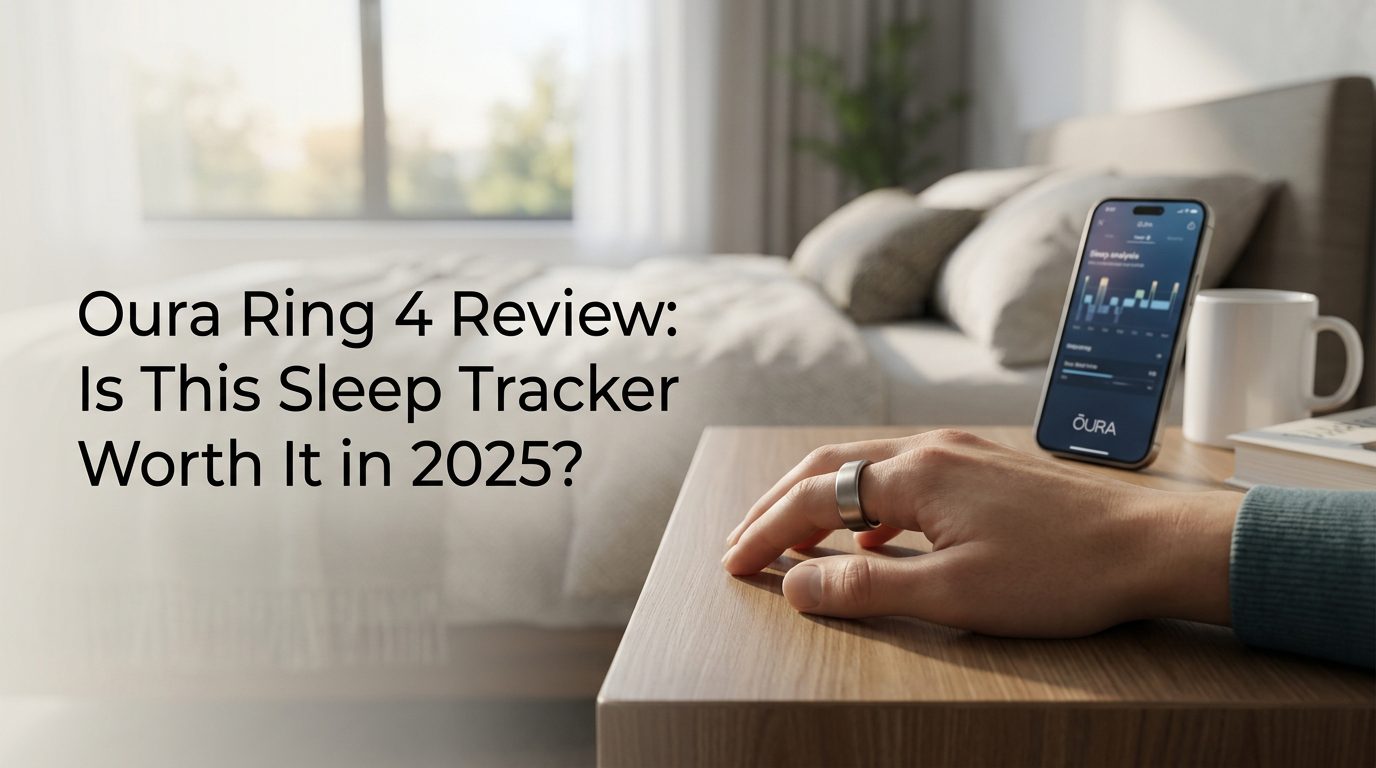
The Evolution of Wearables: Why the Oura Ring 4 Matters Now
The year 2025 has seen a massive shift in how high-performing individuals approach their personal health. The paradigm has shifted from simply tracking active workouts to optimizing quiet recovery. Wearable technology has adapted to this shift, but many smartwatches remain obtrusive, constantly bombarding users with notifications, emails, and haptic alarms. The Oura Ring 4 disrupts this trend by offering a screen-free, distraction-less experience.
Engineered from aerospace-grade titanium, it is remarkably lightweight and incredibly durable. For professionals who spend their days in boardrooms, traveling across time zones, or tethered to screens, the last thing they need is another glowing display demanding their attention. By moving biometric tracking to the finger—where capillary density allows pulse signals to be read significantly stronger than on the wrist—the Oura Ring 4 captures highly accurate physiological data without requiring active user engagement. With up to 7 days of battery life, it operates silently in the background, working seamlessly to analyze your body’s subtle rhythms.
Unmatched Precision: Decoding Your Sleep Architecture
What truly elevates the Oura Ring 4 above its smartwatch competitors is its clinical-grade approach to sleep and recovery tracking. The device employs an array of advanced photoplethysmography (PPG) sensors, medical-grade temperature sensors, and a highly responsive 3D accelerometer to paint a comprehensive picture of your nightly rest. It goes far beyond merely logging the hours you were in bed; it segments your rest into precise sleep architecture stages: Awake, Light Sleep, Deep Sleep, and REM (Rapid Eye Movement) Sleep.
Deep sleep is critical for physical restoration. It is the phase where cellular repair, muscle recovery, and immune system strengthening occur. Conversely, REM sleep acts as your brain’s nightly defragmentation process; it is the cognitive powerhouse responsible for memory consolidation, emotional regulation, and complex problem-solving. For an executive preparing for a high-stakes negotiation or a founder pitching to investors, insufficient REM sleep can severely impair cognitive flexibility and reaction times. The Oura app translates these complex, overlapping biometrics into a daily “Sleep Score,” providing immediate, actionable feedback on the true quality of your rest.
Heart Rate Variability (HRV): The Ultimate Stress Indicator
Perhaps the most critical metric tracked by the Oura Ring 4 is Heart Rate Variability (HRV). HRV measures the microscopic variations in time between each heartbeat and serves as a direct, unfiltered window into your autonomic nervous system. A higher HRV indicates that your body is resilient, adaptable, and operating in a relaxed parasympathetic state, ready to take on acute stress. A consistently low HRV is a glaring physiological warning sign of overtraining, chronic workplace stress, or an impending illness.
By continuously monitoring your HRV baselines, alongside resting heart rate and sleep patterns, the Oura Ring calculates a daily “Readiness Score.” This score is a game-changer for busy professionals attempting to optimize their energy output. On days when your Readiness Score is peaking, you are biologically primed to tackle complex, demanding tasks or push through an intense physical workout. However, when your score plummets, the ring provides an objective, science-backed rationale to dial back your intensity. It encourages you to delegate heavy workloads, opt for restorative yoga over high-intensity interval training, or prioritize an earlier bedtime. It effectively removes the dangerous guesswork from daily energy management.
As an Amazon Associate, Mercatores Online earns from qualifying purchases.