
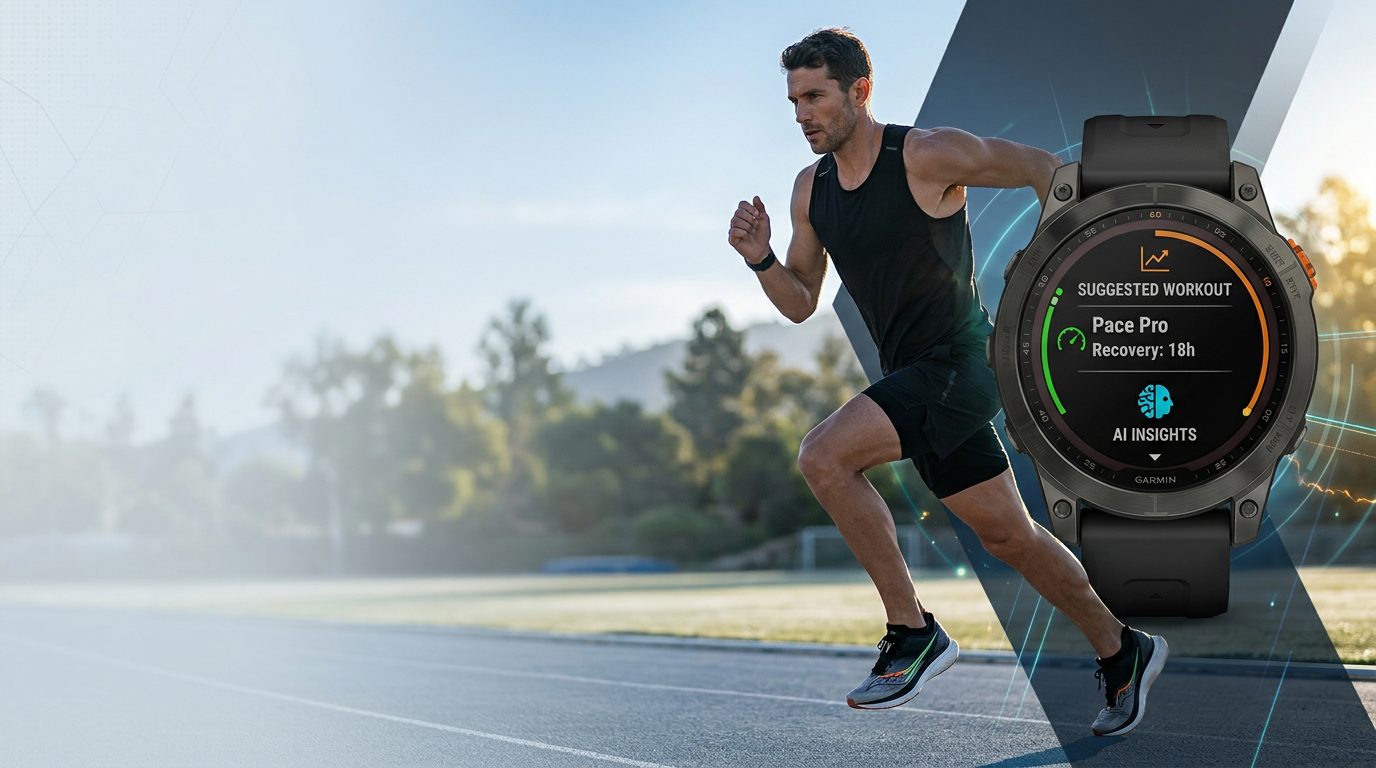
For serious athletes and health-conscious professionals, the primary challenge in fitness tracking is no longer gathering data — it is interpreting that data to make actionable, performance-enhancing decisions. The Garmin Fenix 8 promises a paradigm shift by integrating advanced artificial intelligence into its ecosystem, transforming passive metrics into an active, personalized coaching experience.
The fitness wearable market has been saturated for years with devices that bombard users with endless dashboards of disconnected heart rate variability scores, VO2 max values, and sleep staging data. Without a sports science background or a dedicated human coach, translating these raw numbers into a coherent daily training plan is overwhelming. The Fenix 8 changes this entirely. Its onboard machine learning processes millions of physiological and environmental data points to tell you not just what you did yesterday, but precisely what you should do today to maximize your potential.
From Data Collection to AI Interpretation: What Changed
Early fitness wearables were glorified pedometers. The industry then evolved toward gathering increasingly complex biometric data — SpO2 levels, respiration rates, sleep staging — but created a new problem: data fatigue. Athletes had more information than ever, yet still didn’t know whether to run their scheduled 15-mile long run or rest based on three hours of disrupted sleep.
The Fenix 8 bridges this gap. Instead of presenting a dashboard of disconnected numbers, the AI synthesizes your internal physiological data with external environmental factors — heat acclimatization data, altitude changes, upcoming weather — to provide holistic, context-aware training guidance. This evolution from data collection to intelligent interpretation marks the most meaningful milestone in consumer sports technology in a decade.
3 AI-Powered Features That Set the Fenix 8 Apart
Dynamic Training Readiness
Analyzes overnight HRV, sleep history, and 7-day training load to autonomously adapt your scheduled sessions. If recovery is low, it converts your HIIT session into zone-2 aerobic work automatically — exactly what an elite coach would do.
AI-Enhanced PacePro
Factors in elevation profiles, real-time weather (headwinds, humidity), and live biometric fatigue to dynamically adjust your pace mid-run. If core temperature rises prematurely on a climb, the algorithm recalculates a sustainable target for the remainder of your race.
Predictive Injury Prevention
Analyzes asymmetrical ground contact time, stride length changes, and acute-to-chronic workload spikes to identify micro-signs of overuse before they become clinical injuries. Sends proactive alerts with specific recovery prescriptions — a genuinely unprecedented feature.
Real-World Case Studies
Step-by-Step: How to Optimize Your Fenix 8 AI Experience
- Wear it 24/7 for 14–21 days first. The AI needs your baseline HRV, resting heart rate, and sleep architecture before its coaching becomes truly personalised.
- Enter accurate personal metrics in Garmin Connect. True maximum heart rate, lactate threshold, and current weight directly affect how the AI calculates your training zones and energy expenditure.
- Input upcoming races and goals. The AI will backwards-plan a periodized macrocycle tailored to your timeline and current fitness level — not a generic off-the-shelf plan.
- Make the Morning Report non-negotiable. The AI-generated daily briefing — sleep score, HRV trend, readiness rating, recommended workout — should inform your schedule before you open your calendar.
- Pair with a chest strap for high-intensity work. The Garmin HRM-Pro Plus eliminates wrist-sensor cadence lock during weightlifting and rapid-interval sessions, keeping your AI input data clean.
Pros and Cons at a Glance
Final Verdict: The Definitive AI Training Partner
The Garmin Fenix 8 redefines what a premium fitness wearable should be. By moving beyond raw data collection into intelligent, real-time interpretation, it solves the single most significant gap in consumer sports technology — the translation gap between metrics and meaningful daily action. Dynamic training readiness, adaptive pace coaching, and predictive injury modeling deliver a level of personalized guidance previously reserved for professional athletes with full-time human coaches.
For the serious athlete genuinely committed to optimizing performance and minimizing injury risk, the Garmin Fenix 8 is not just another smartwatch — it is the most capable training partner you have ever had on your wrist.
As an Amazon Associate, Mercatores Online earns from qualifying purchases.