
Loop Engage Earplugs Review: Best Sensory Tool for ADHD and Autism in 2025
Are the Loop Engage earplugs genuinely worth the investment for adults managing ADHD, autism, or general auditory sensitivity? Yes, absolutely. Unlike traditional foam plugs that blindly muffle all sound and leave you feeling as though your head is underwater, the Loop Engage utilizes an innovative acoustic channel and mesh filter to selectively reduce background noise by 16 decibels (dB) while keeping speech crystal clear. For anyone who feels overwhelmed by the constant hum of a busy environment but still needs to actively engage in conversations, this is without a doubt the premier sensory management tool on the market today.

Why Sensory Tools Matter More Than Ever in 2025
As we navigate 2025, the dialogue surrounding adult neurodivergence—particularly late-diagnosed ADHD and autism—has fundamentally shifted. We now understand that conditions like sensory processing disorder (SPD) and auditory hypersensitivity are not simply mild annoyances; they are genuine physiological responses that trigger the nervous system’s “fight or flight” mechanism. For many adults aged 30 to 60, the modern world is an absolute cacophony. Open-plan offices, bustling coffee shops, and even the ambient noise of a busy household can drain cognitive energy, leading to profound mental fatigue and end-of-day burnout.
This is exactly why the health-tech industry has pivoted toward elegant, science-backed wearable wellness solutions. We are moving away from the stigma of clunky medical devices. Today’s neurodivergent professionals require tools that blend seamlessly into their professional attire while providing measurable neurological relief. Enter the Loop Engage: a device engineered not to cancel the world out entirely, but to seamlessly take the sharp, overwhelming edge off of it. By filtering out high-frequency background static, these earplugs help lower cortisol levels and preserve your vital focus.
Key Features: The Engineering Behind the Loop Engage
What sets the Loop Engage apart from its competitors is its meticulous acoustic engineering. Here is a detailed breakdown of the features that make these earplugs the best sensory tool for ADHD and autism:
Acoustic Filtering Technology
Featuring a patented acoustic channel and a high-fidelity mesh filter, the Engage provides a precise 16 dB Single Number Rating (SNR) reduction. It successfully targets jarring environmental frequencies while letting human voices pass through naturally.
Zero Occlusion Effect
Traditional earplugs create an “occlusion effect”—that boomy, underwater echo of your own chewing, breathing, and speaking. The Loop Engage is specifically engineered to eliminate this, making it ideal for socializing and talking.
Discreet, Jewelry-Like Design
Made from durable, transparent medical-grade silicone, they look more like modern tech accessories or subtle jewelry. They sit flush inside the ear concha, ensuring you never feel self-conscious wearing them at work.
Loop Mute Compatibility
If you need extra quiet, you can insert the silicone Loop Mute accessory into the ring. This adds an additional 5 dB of noise reduction on demand, bringing the total attenuation up to a highly isolating 21 dB.
Loop Engage vs. Quiet vs. Experience
Choosing the right model can be confusing. Here is how the Loop Engage specifically compares to the rest of the Loop family, illustrating why the Engage model is uniquely suited for ADHD and autism management.
Real-World Case Study: Surviving the Open-Plan Office
To truly understand the benefits, let’s look at a practical usage scenario. Sarah is a 38-year-old marketing director who was diagnosed with ADHD in her early thirties. Her company recently transitioned to a fully open-plan office. Between the hum of the HVAC system, the clatter of mechanical keyboards, and three different conversations happening across the room, Sarah found her sensory threshold breached by 11:00 AM every day. Traditional noise-canceling headphones made her feel too isolated, and she often missed colleagues calling her name.
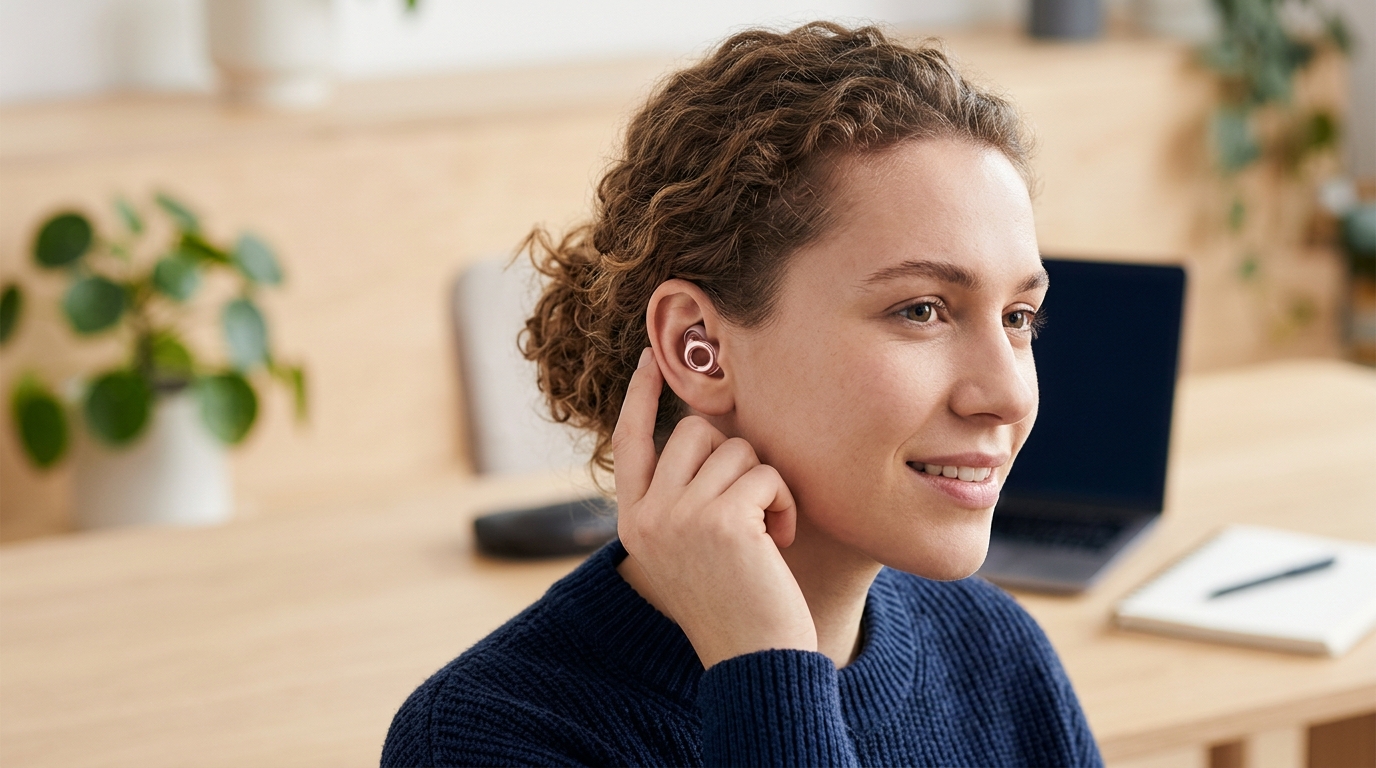
By integrating the Loop Engage into her daily routine, Sarah experienced an immediate shift. The earplugs actively dulled the abrasive frequencies of typing and distant chatter, bringing the ambient noise down to a manageable baseline. Yet, because the Engage minimizes the occlusion effect, she could conduct impromptu meetings and answer her desk phone without needing to remove the plugs. Over a month of use, Sarah noted a significant reduction in her post-work exhaustion and stress headaches. The Loop Engage didn’t change her demanding job, but it radically upgraded her neurological armor.
Pros and Cons of the Loop Engage
As a trusted health-tech platform, Mercatores Online prides itself on honest evaluations. Here is our balanced look at where the Loop Engage shines and where it falls slightly short.
Step-by-Step Guide: How to Get the Best Results
To maximize the sensory relief of your Loop Engage earplugs, proper fit and maintenance are non-negotiable. Follow these steps when you first unbox them:
- Test All Ear Tip Sizes: The plugs come pre-installed with Medium tips. Do not assume this is your size. Try the XS, S, and L tips. The right size should seal completely without applying painful pressure to your ear canal.
- The “Twist and Lock” Insertion: Gently push the earplug into your ear, and then rotate the loop backwards toward the back of your head. It should nestle flat inside the bowl of your ear (the concha). If it sticks out, it is not inserted correctly.
- Add the Mute for High-Stress Days: If you feel a meltdown or intense overstimulation coming on, push the silicone Loop Mute ring into the center of the Engage. This adds an immediate 5 dB of extra protection.
- Daily Maintenance: Because they sit in the ear canal, wipe the silicone tips daily with a damp cloth or a mild, non-alcoholic wipe to prevent wax buildup from blocking the acoustic mesh filter.
Who Are Loop Engage Earplugs For? (And Who Should Skip Them)
While we consider them the top tier of sensory tools, they serve a very specific purpose. Self-qualifying ensures you invest in the right health tech for your needs.
Perfect For:
- Adults with ADHD, autism, or Sensory Processing Disorder who suffer from auditory overstimulation.
- Parents dealing with the chaotic, high-pitched noise of young children but who still need to hear crying or emergencies.